Booking trains
Which class to pick, when seats sell out and how to read the e-ticket.
✏️ This guide is a draft and is still being checked.
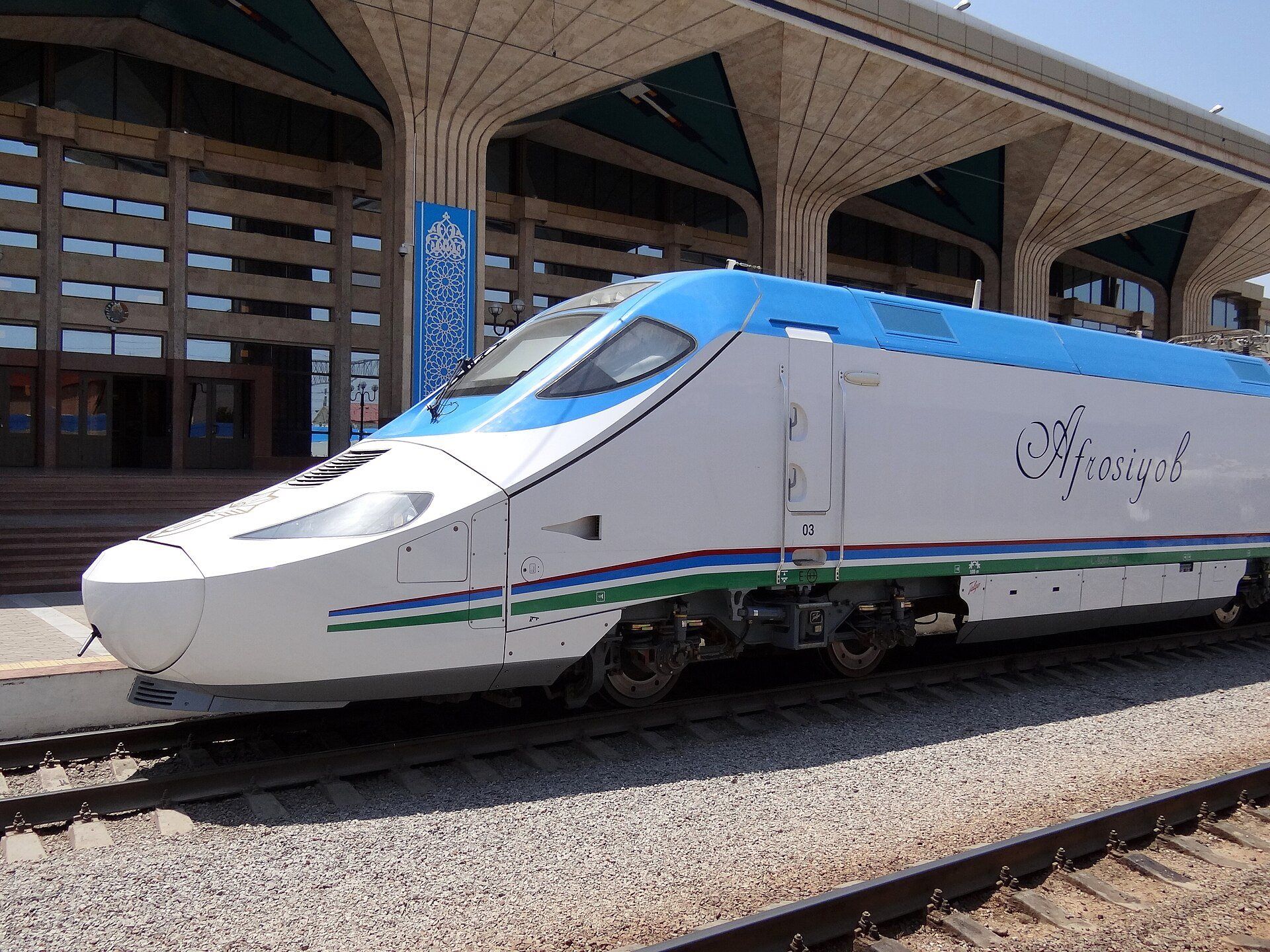
Trains are the easiest way to travel between Uzbekistan’s main cities. They are cheap, comfortable and usually on time, and the fast trains are often quicker than flying once you count the airport.
The trains you will use
Afrosiyob (high-speed)
The fast, modern train pictured at the top of this page. It links Tashkent, Samarkand and Bukhara, and is the one most visitors want. Tashkent to Samarkand takes about 2 hours 10 minutes.
Sharq and other day trains
Slower and cheaper than the Afrosiyob, on the same main line, with rows of seats in open carriages. A good choice when the Afrosiyob is sold out.
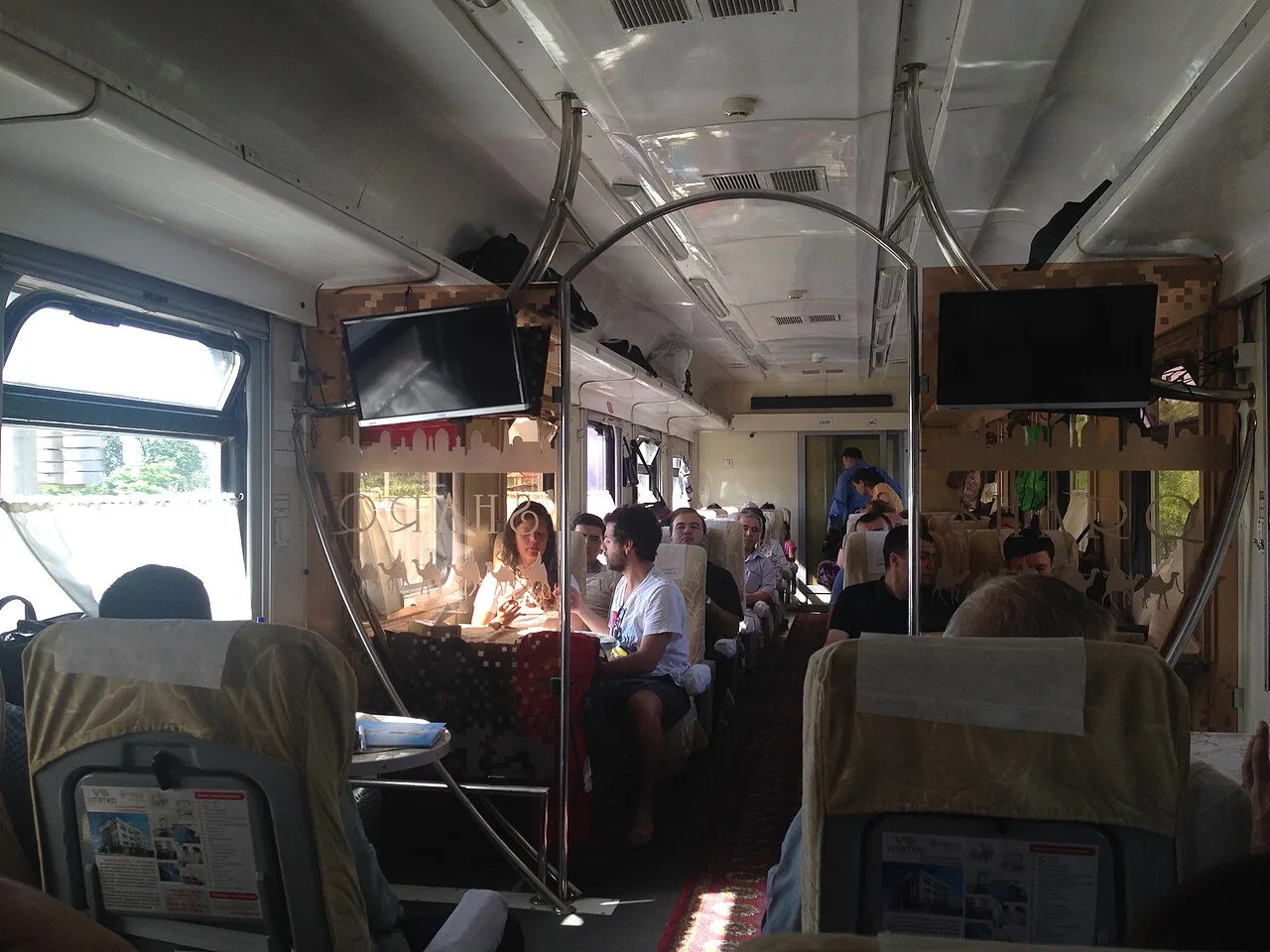 Photo: Davide Mauro, CC BY-SA 4.0
Overnight trains
They go to Khiva, Urgench and the Fergana Valley. They have sleeper carriages, so you save a night in a hotel.
Which class to pick
On the Afrosiyob, economy is perfectly comfortable for a two-hour trip. Business gives you a bigger seat and a snack.
On overnight trains you choose a berth:
- Platskart: an open carriage with bunks. Cheapest and busiest.
- Kupe: a closed compartment with four berths. The best value for most travellers.
- SV: a compartment with two berths. The most private, and the first to sell out.
When to book
Afrosiyob seats sell out first, especially from spring to autumn and around public holidays. Book as soon as your dates are fixed, ideally a few weeks ahead. Slower trains usually have seats closer to the day.
Book on the official Uzbekistan Railways website or app, or at a station ticket office. You need your passport details to buy a ticket.
On the day
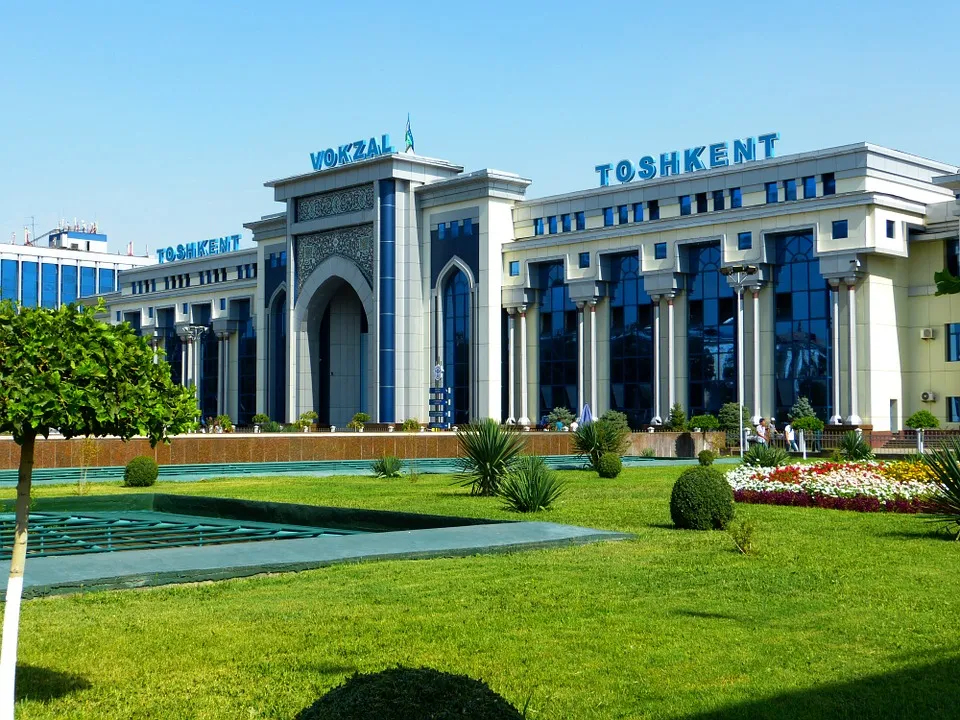 Photo: Pixabay, CC0
- Arrive 30–40 minutes early. Stations have a security check at the entrance, and you show your passport and ticket before you reach the platform.
- Have your passport with you; the conductor checks it against the ticket.
- The e-ticket shows the train number, carriage (vagon) and seat or berth. Keep it on your phone and, if you can, on paper.
- Check which station your train leaves from. Big cities can have more than one.